
Mumbai to Shirdi
Ambulance Service
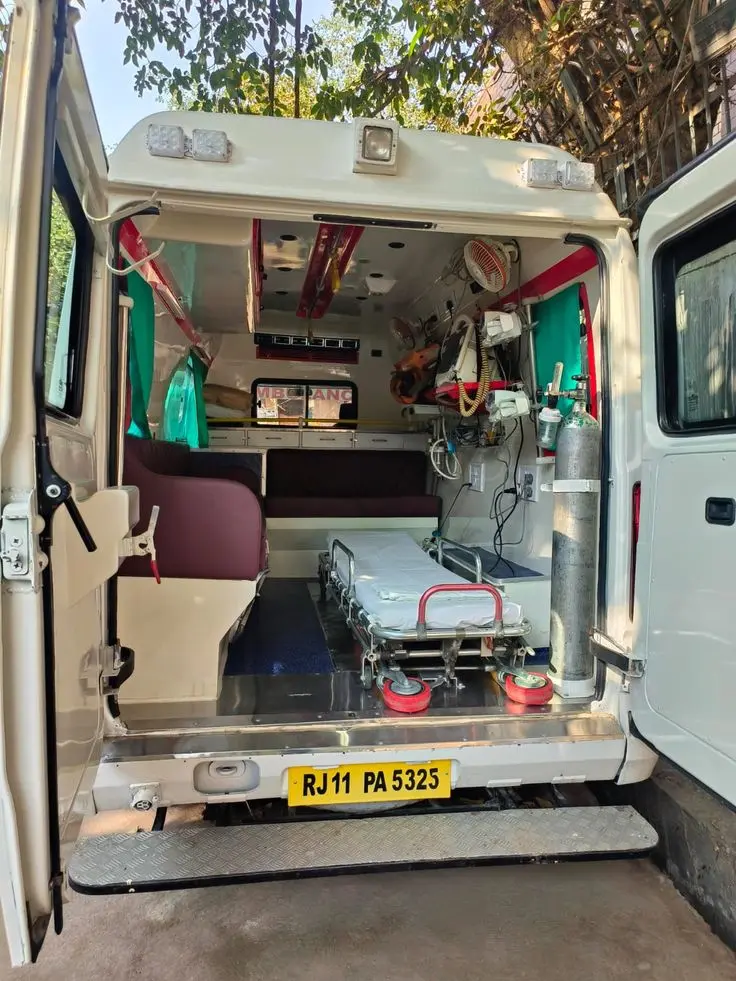
Book an ICU, ventilator, cardiac or freezer-van ambulance from Mumbai to Shirdi. Roughly ~240 km via NH-160 via Sinnar, or Samruddhi Mahamarg to the Shirdi interchange, with a trained paramedic on board and one all-inclusive price confirmed before the ambulance leaves.
~240 km
Road distance from Mumbai
4.5 – 5.5 hours
Typical ambulance running time
Paramedic On Board
For the entire journey
ICU & Ventilator
Available on this route
Ambulance Service from Mumbai to Shirdi
Shirdi generates a very particular kind of ambulance demand. It draws enormous numbers of visitors, a large share of them elderly, who travel long distances, stand in queues for hours and often skip meals and medication while doing it. Cardiac events, collapses and dehydration cases are common, and they happen to people who are far from their own doctors and their own hospitals.
That shapes what families need. The local Sansthan hospital and the nearby centres at Kopargaon and Loni stabilise patients well, but complex cardiac and neuro cases are usually referred onward. Most AIVA bookings on this route are stabilise-then-move: the patient is held locally and then transferred to a Mumbai tertiary hospital, often with the family following behind.
The Samruddhi Mahamarg's dedicated Shirdi interchange has taken meaningful time off this journey. What has not changed is the congestion immediately around the temple during festivals, which is why we build the last stretch into the timing rather than treating it as a rounding error.
Why families book this route:
- Cardiac events and collapses among elderly pilgrims at the temple complex
- Transfer to Mumbai tertiary hospitals after stabilisation at the Sansthan hospital
- Out-of-state visitors needing a first leg to Mumbai before travelling home
- Mortuary transfers where a devotee has passed away while visiting
How We Drive Mumbai to Shirdi
Route taken
NH-160 via Sinnar, or Samruddhi Mahamarg to the Shirdi interchange
Shirdi is now directly served by a dedicated Samruddhi Mahamarg interchange, which is the fastest way in from Mumbai. The alternative runs NH-160 through Nashik and Sinnar and then east through Kopargaon. The expressway option is smoother for a patient in discomfort; the highway option can be preferable if the pickup or drop sits closer to Sinnar or Kopargaon than to Shirdi town itself.
Towns along the way
- Mumbai
- →Kasara
- →Igatpuri
- →Sinnar
- →Kopargaon
- →Shirdi
Terrain and conditions
The Kasara Ghat climb is the only significant gradient. After Igatpuri the route runs across open plateau. The complication at the Shirdi end is not terrain but congestion — during major festivals and on weekends the approach roads around the temple complex become extremely dense, and an ambulance can lose more time in the final two kilometres than in the preceding fifty.
Crew, oxygen and rest planning
A driver and paramedic handle this route, with cardiac-trained crew prioritised because so many bookings here are cardiac events among elderly pilgrims. One halt is planned around the midpoint. During festival periods the crew allows extra time for the congested final approach and, where possible, coordinates with Sansthan staff for access.
Hospitals We Commonly Transfer Between
These are the hospitals we move patients to and from most often on this route. We are not limited to them — pickup and drop can be any hospital, nursing home or residential address.
Pickup points in Mumbai
- Tata Memorial Hospital, Parel
- Kokilaben Dhirubhai Ambani Hospital, Andheri
- Lilavati Hospital, Bandra
- P. D. Hinduja Hospital, Mahim
- Jaslok Hospital, Pedder Road
- Breach Candy Hospital, Bhulabhai Desai Road
- Fortis Hospital, Mulund
- Nanavati Max Super Speciality, Vile Parle
- Gleneagles Hospital, Parel
- KEM Hospital, Parel
- Bombay Hospital, Marine Lines
- Asian Heart Institute, BKC
- Hiranandani Hospital, Powai & Vashi
- Apollo Hospitals, Navi Mumbai
Receiving hospitals in Shirdi
- Shri Saibaba Hospital (Sansthan), Shirdi
- Sanjeevani Medical Foundation, Kopargaon
- Pravara Rural Hospital, Loni
- Ashwini Rural Medical College, Kumbhari
- Sub-District Hospital, Rahata
What Your Mumbai to Shirdi Quote Covers
We quote one all-inclusive figure on the call, before the ambulance is dispatched. No per-kilometre surprises afterwards, and no separate bill for the vehicle's return.
Included in the quoted figure
- Fuel for the full one-way journey
- All toll plazas and interstate permits on the route
- Driver allowance and relay-driver cost on long hauls
- Return fare of the vehicle to Mumbai
- Oxygen cylinders and consumption during transit
- Trained paramedic or EMT for the entire journey
- Stretcher, transfer sheet and immobilisation equipment
- Continuous vitals monitoring en route
What shapes the figure
- Ambulance type — patient transport, BLS, ALS/cardiac, ICU/ventilator or freezer van
- One-way road distance and the vehicle's return leg
- Oxygen requirement, and whether a ventilator or infusion pumps run throughout
- Whether a doctor is needed on board in addition to the paramedic
- Night departure, public holidays and same-hour emergency dispatch
- Festival and weekend congestion around the temple, which extends crew on-duty time
- Whether the pickup is Shirdi town, Rahata, Kopargaon or Loni
- Cardiac-capable ambulance specification, which is the most frequent requirement on this route
Tell us the pickup address, the destination and the patient's condition. We will confirm the ambulance type and the full cost on the same call.
Call +91 74001 94039 for a quoteRoad, Train or Air Ambulance?
The right choice depends on the patient's condition and the distance, not on what costs the most. Here is how the three compare.
Road Ambulance
Up to roughly 600 km, and any distance for mortuary transfers
- Door to door — ward to ward, with no transfers in between
- Fastest to arrange; can leave within the hour
- Family can travel alongside the vehicle
- Full ICU capability including ventilator and infusion pumps
Trade-off: Beyond 12–14 hours the journey itself becomes a clinical burden for a fragile patient.
Train Ambulance
Stable patients on long routes where flying is not affordable
- Far gentler than road over very long distances
- Considerably cheaper than air for the same journey
- Suits stable patients who need supervision but not intensive care
- Road ambulances still handle both the first and last legs
Trade-off: Tied to train schedules and station access, so it is rarely the fastest option.
Air Ambulance
Critical patients, and generally anything beyond 800–1,000 km
- Hours instead of a day or more on the road
- Full flying ICU with critical-care crew on board
- The right answer for unstable and ventilator-dependent patients
- Ground ambulances connect both airports to the hospitals
Trade-off: Costs substantially more, needs clearances, and adds two extra patient transfers.
Travelling by train and only need the station leg? Our railway station ambulance service picks patients up at the station and takes them to the hospital, and brings them back for the journey home.
Our recommendation for Mumbai to Shirdi
Road ambulance is the correct mode at 240 km. Shirdi has an airport with limited operations, and arranging a charter almost always takes longer than simply driving. For a patient who has had a cardiac event at the temple and needs Mumbai's specialist care, a road ALS or ICU ambulance dispatched immediately is faster in practice than waiting for an aircraft.
Booking Your Mumbai to Shirdi
Tell us the pickup address in Mumbai, the destination in Shirdi and the patient's condition. We confirm the ambulance type and the full cost on the same call, then plan the crew, oxygen and halts specifically for this route before the vehicle leaves.

Share Your Location
Enter the pickup location and basic details so we can find the nearest available ambulance quickly.

Choose Ambulance Type
Select ICU, ALS, or BLS ambulances based on the medical need to ensure proper care every time fast.

Get Help Fast
We dispatch the nearest ambulance instantly with real time coordination until medical help arrives.